
Torque measurement plays a vital role in aerospace propulsion systems, ensuring safe and efficient operation of aircraft. From helicopters to turbofan engines, rotational forces transmit drive power to generate thrust and lift. Understanding the torque delivered to these systems is essential for flight control, efficiency, and system reliability. This article examines two key torque measurement technologies—displacement sensors and Transcent SAW technology—analyzing their principles, advantages, and challenges.
How Torque Sensors Work
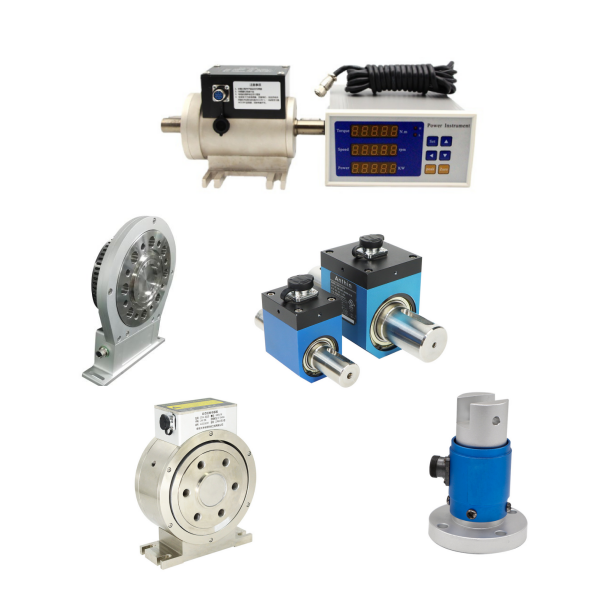
Torque sensors are designed to measure the rotational forces generated by tools or mechanical systems. For example, in industrial settings, a dynamic torque sensor displays torque values on a monitor, showcasing the forces applied during forward and reverse tool operations. Similarly, in aerospace systems, torque sensors monitor the rotational forces in propulsion systems such as helicopter blades and turboprop engines.
Displacement Sensors in Aerospace Applications
Displacement sensors are a traditional method for measuring torque in aerospace systems. They use a pair of identical toothed discs mounted at opposite ends of a shaft. By measuring the phase difference between these discs, the system calculates the twist angle, which is then used to determine torque.
Advantages
Displacement sensors are capable of handling high loads, as they can be overloaded to the maximum capacity of the twist shaft. This makes them suitable for robust applications where durability is critical.
Challenges
Despite their reliability, displacement sensors have several limitations:
They require the shaft to be rotating, preventing the measurement of static torque or loads.
A reduced diameter section of the shaft, known as a torsion bar, is necessary to enhance the twist angle. This can negatively impact the mechanical stability of the system.
Additionally, displacement sensors are sensitive to temperature variations and require a larger packaging volume, making them less suitable for compact or embedded systems.
Transcent SAW Technology
Transcent SAW (Surface Acoustic Wave) technology is a modern, wireless solution for torque measurement. It consists of two main components: sensing elements attached to the shaft and an electronic interrogation unit (reader) mounted off the shaft. The reader sends an interrogation signal, which is reflected back by the sensing elements, allowing the system to calculate torque based on oscillation frequency changes.
Benefits
Transcent SAW technology offers several advantages over traditional methods:
| Feature | Benefit |
|---|---|
| Wireless Installation | Completely wireless setup with passive components on the shaft. |
| Compact Design | Small dimensions allow for easy integration into complex systems. |
| High-Speed Measurement | Capable of capturing rapid physical property changes. |
| No Torsion Bar Required | Eliminates the need for a torsion bar, ensuring better system stability. |
Limitations
While Transcent SAW technology is highly advanced, it comes with its own challenges:
It is not available as an off-the-shelf solution and requires custom design for specific systems. Additionally, it relies on proprietary components, making it less accessible for general applications.
Choosing the Right Solution
When selecting a torque sensor for aerospace applications, consider the specific requirements of the system. For larger, robust systems, displacement sensors may suffice despite their limitations. However, for compact, high-speed applications requiring precision, Transcent SAW technology is a superior choice.
To learn more about advanced torque measurement technologies, visit Sino-Inst, a leading provider of torque sensors and transducers for industrial and aerospace applications.